
The Importance of Color Usage in Design

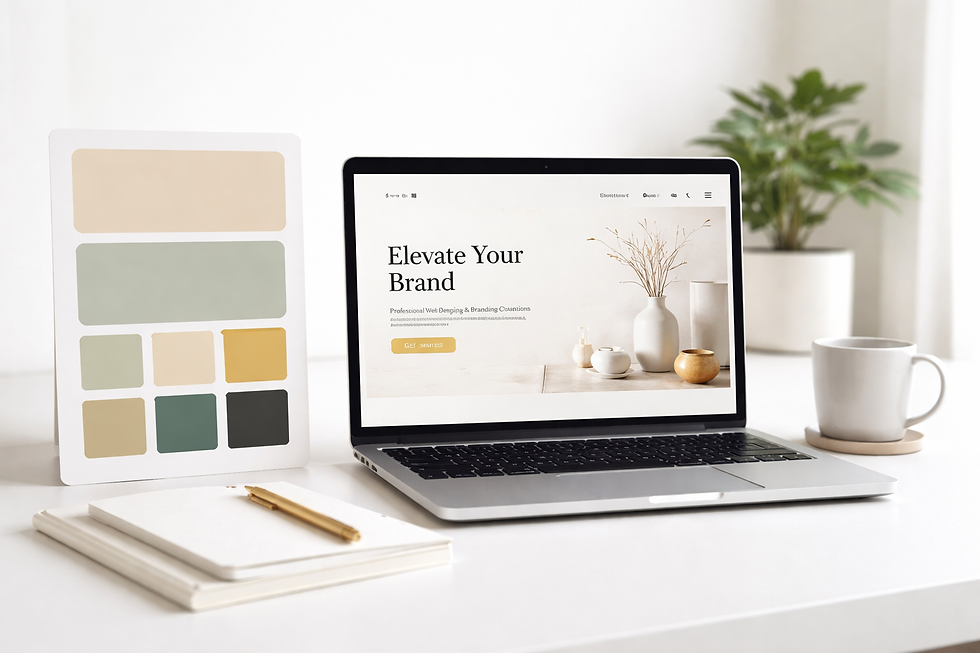
Color Is Strategy, Not Decoration
Many business owners choose website colors based on personal preference. But effective design is not about what you like — it is about what works for your audience and your goals.
Color should support your message, strengthen your brand identity, and guide user behavior.
When used correctly, color builds trust, increases clarity, and improves conversions. When used poorly, it creates confusion and weakens your brand.
Before choosing your website colors, ask yourself: What should my visitors feel? What action should they take? And how can color help guide them there? In web design, the real key is not just which colors you choose, but how you use them.
A professional website usually works best with a limited color palette. Too many colors create confusion and make the design feel unorganized. Instead, choose one dominant color, one supporting color, and one accent color. The dominant color sets the overall mood and is often used in backgrounds or large sections. The supporting color adds structure and variation. The accent color should be used strategically for important elements like buttons, links, and calls to action.
One of the most important principles in color usage is contrast. If your background and text colors are too similar, your website becomes hard to read. High contrast between text and background improves readability and makes your design look cleaner. For example, dark text on a light background is usually easier to read than light text on a bright or busy background.
Another important design principle is visual hierarchy. Color helps guide the user’s eye. Your most important actions — such as “Book Now” or “Get a Quote” — should stand out clearly from the rest of the page. If everything is colorful and bold, nothing stands out. But if your design is mostly neutral and you use a strong accent color only for buttons, users will immediately know where to click.
It’s also essential to test your colors on different devices. A shade that looks soft and elegant on a desktop screen may appear much brighter on mobile. Good platforms like Wix allow you to preview and adjust designs for different screen sizes, which helps maintain consistency.
Finally, remember that white space is part of your color strategy. Not every section needs a colored background. White or neutral space makes your design breathe and gives more impact to the areas where color is used intentionally.
Good color usage creates clarity, trust, and direction. Poor color usage creates distraction and confusion.
If you’re designing or redesigning your website, don’t just ask “What colors do I like?” Ask “What should my visitors feel, and where do I want them to click?”
That’s when color becomes a strategy, not just decoration.


